
Introduction
In today’s competitive digital landscape, businesses need effective strategies to reach potential customers online. One of the most powerful methods is search engine marketing.
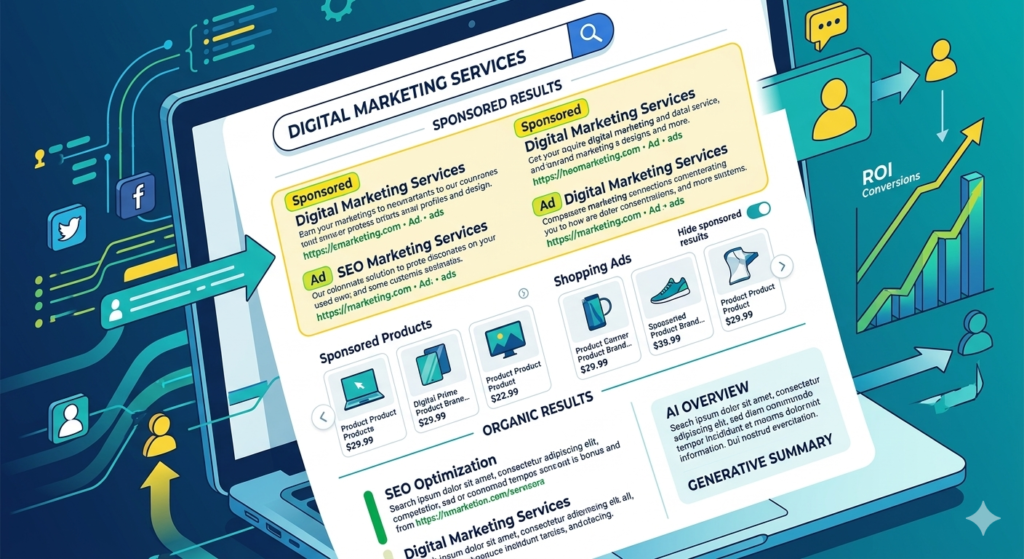
Search engine marketing (SEM) involves promoting websites by increasing their visibility in search engine results pages through paid advertising. Businesses use SEM to target specific keywords and display ads to users who are actively searching for products or services.
Platforms such as
Google Ads
allow businesses to create targeted advertising campaigns that drive traffic and generate leads.
In this article, we will explore 8 powerful search engine marketing strategies that can help businesses improve visibility, attract customers, and grow online.
1. Keyword Research for Paid Campaigns
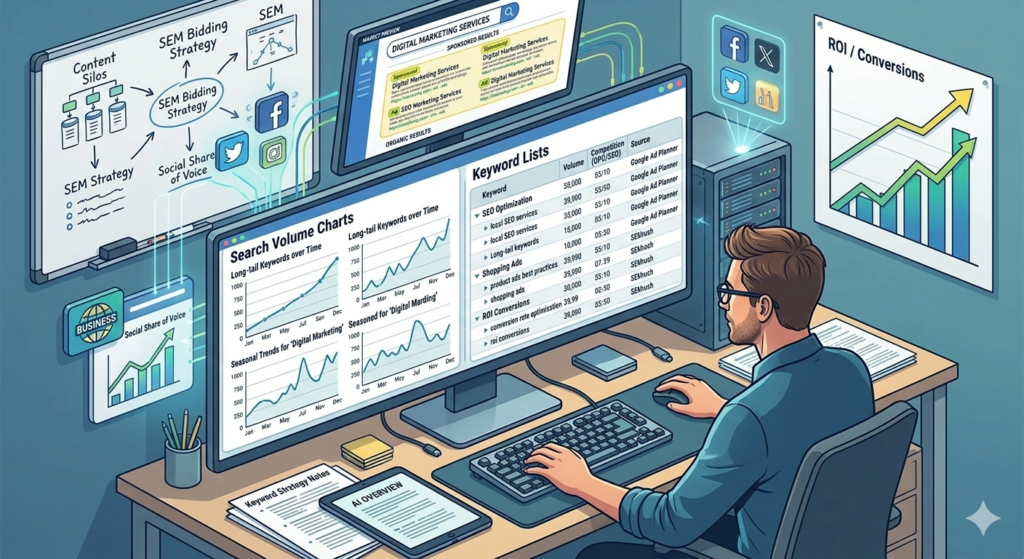
Keyword research is the foundation of successful search engine marketing campaigns.
Businesses must identify the keywords their target audience uses when searching online. Choosing the right keywords ensures that ads appear in front of people who are actively looking for related services.
Effective keyword research helps improve ad performance and reduce advertising costs
2. Create High-Converting Ad Copy
Ad copy plays a critical role in SEM campaigns. Your advertisement must capture attention and encourage users to click.
A good ad copy should include:
- Clear headline
- Relevant keywords
- Strong call-to-action
For example:
“Get Professional Website Design – Free Consultation Today”
Well-written ad copy improves click-through rates and campaign performance.
3. Optimize Landing Pages
A successful SEM campaign does not end with a click. Visitors must land on a page that encourages them to take action.
Optimized landing pages should include:
- Clear headline
- Strong call-to-action
- Relevant information
- Fast loading speed
A well-designed landing page improves conversion rates and maximizes marketing results.
4. Target the Right Audience
Audience targeting allows businesses to display ads to specific users based on location, interests, and behavior.
This ensures your ads are shown to people who are most likely to become customers.
Targeted advertising increases the effectiveness of search engine marketing campaigns and reduces wasted ad spend.
5. Use Negative Keywords.
Negative keywords prevent your ads from appearing in irrelevant search results.
For example, if you offer premium services, you may exclude searches containing the word “free.”
Using negative keywords improves campaign efficiency and ensures your ads reach the right audience.
6. Monitor Campaign Performance
Tracking campaign performance is essential for improving results.
Marketing tools like
Google Analytics
help businesses analyze website traffic, conversions, and user behavior.
Monitoring data allows marketers to adjust campaigns and improve performance over time.
7. Use Remarketing Campaigns
Remarketing allows businesses to show ads to users who have previously visited their website.
These ads remind visitors about your products or services and encourage them to return and complete their purchase.
Remarketing is one of the most effective search engine marketing strategies for increasing conversions.
8. Continuous Campaign Optimization
SEM campaigns require continuous testing and optimization.
Businesses should regularly:
- Test different ad headlines
- Experiment with keywords
- Improve landing pages
- Adjust bids
Continuous optimization ensures better results and higher return on investment.
Conclusion
Search engine marketing is a powerful digital marketing strategy that allows businesses to reach customers at the exact moment they are searching for products or services.
By using effective keyword research, creating compelling ad copy, optimizing landing pages, and analyzing campaign data, businesses can generate targeted traffic and increase sales.
When used correctly, SEM can become one of the most valuable marketing channels for business growth and online visibility.